Frieze
“Sandra Jackson-Dumont’s Favourite Works from Frieze Los Angeles Viewing Room”
February 20, 2026
The curator and Getty Presidential Scholar picks layered works by artists including Ebony G. Patterson, Zenobia Lee and Alma Thomas, that speak to diasporic memory and resistance
Alma Thomas, Red Rambling Rose Spring Song, 1976
Acrylic on canvas, 134.9 x 89.5 cm. Presented by Michael Rosenfeld Gallery
Exultant! Thomas’s rhythmic brushwork radiates pure joy, transforming abstraction into a celebration of colour’s emotional force. The painting feels like a garden in motion: structured, musical, alive.
Y. Malik Jalal, SPADE NO. 2, 2026
Forged steel, upholstery fabric, sublimation print on polyester, found printed material, 86 x 69 x 6 cm. Presented by Murmurs
Jalal’s forged steel and collage-based construction pairs metalwork with intimate found photographs to meditate on Black history, labour and domestic life. I’m drawn to how he weaves African customs, Southern craft traditions, and the afterlives of American violence into one layered expression of Blackness.
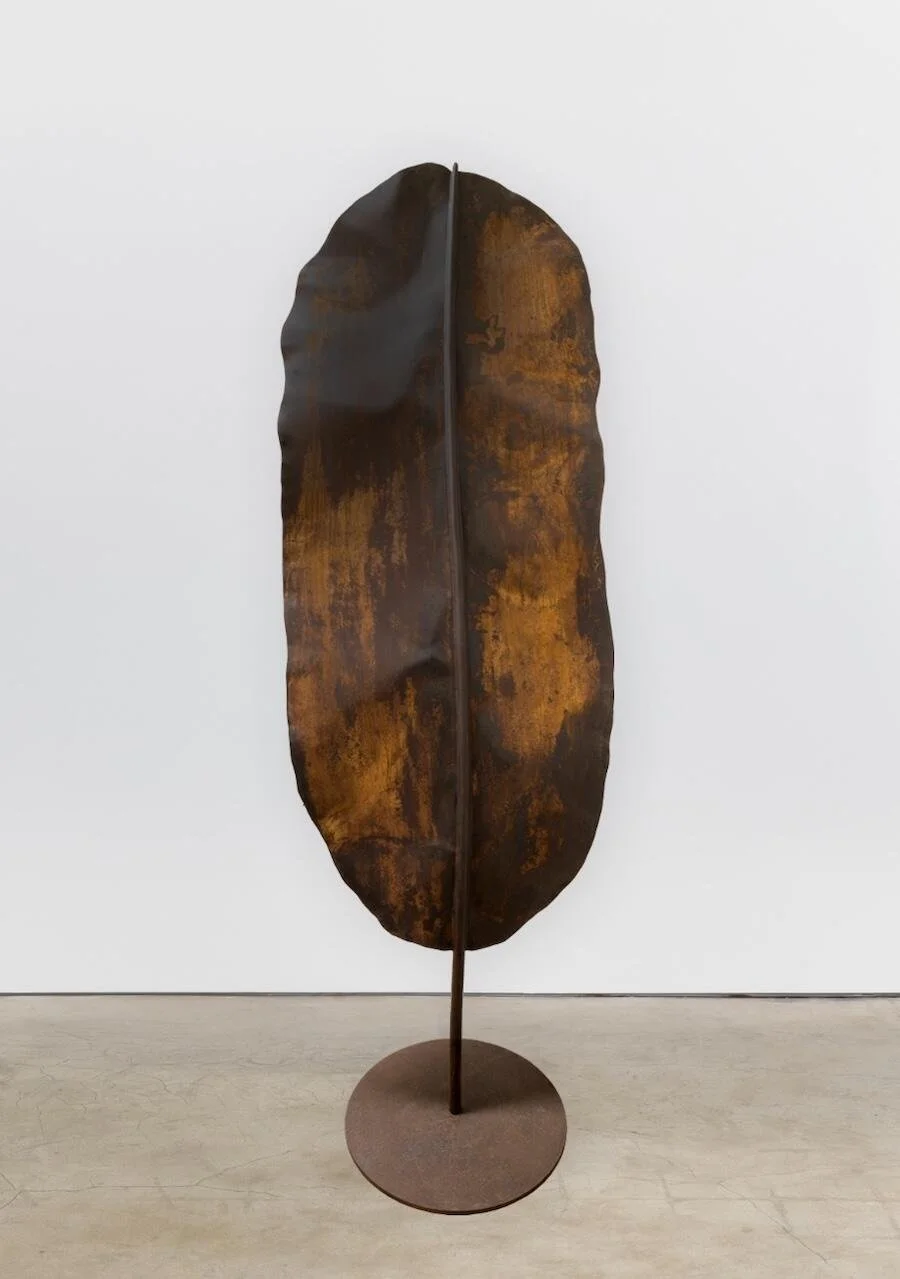
Zenobia Lee, Banana Leaf as a Case for Modernity (case 3), 2025
Steel, 274 cm x 74 cm. Presented by Sea View
Lee’s chemically patinated steel banana leaf is both lush and industrial, reminding us that nature has always been an unpredictable actor in the imperial project. I love how she frames the leaf as ‘a locality of refusal’, insisting on the political life of flora.
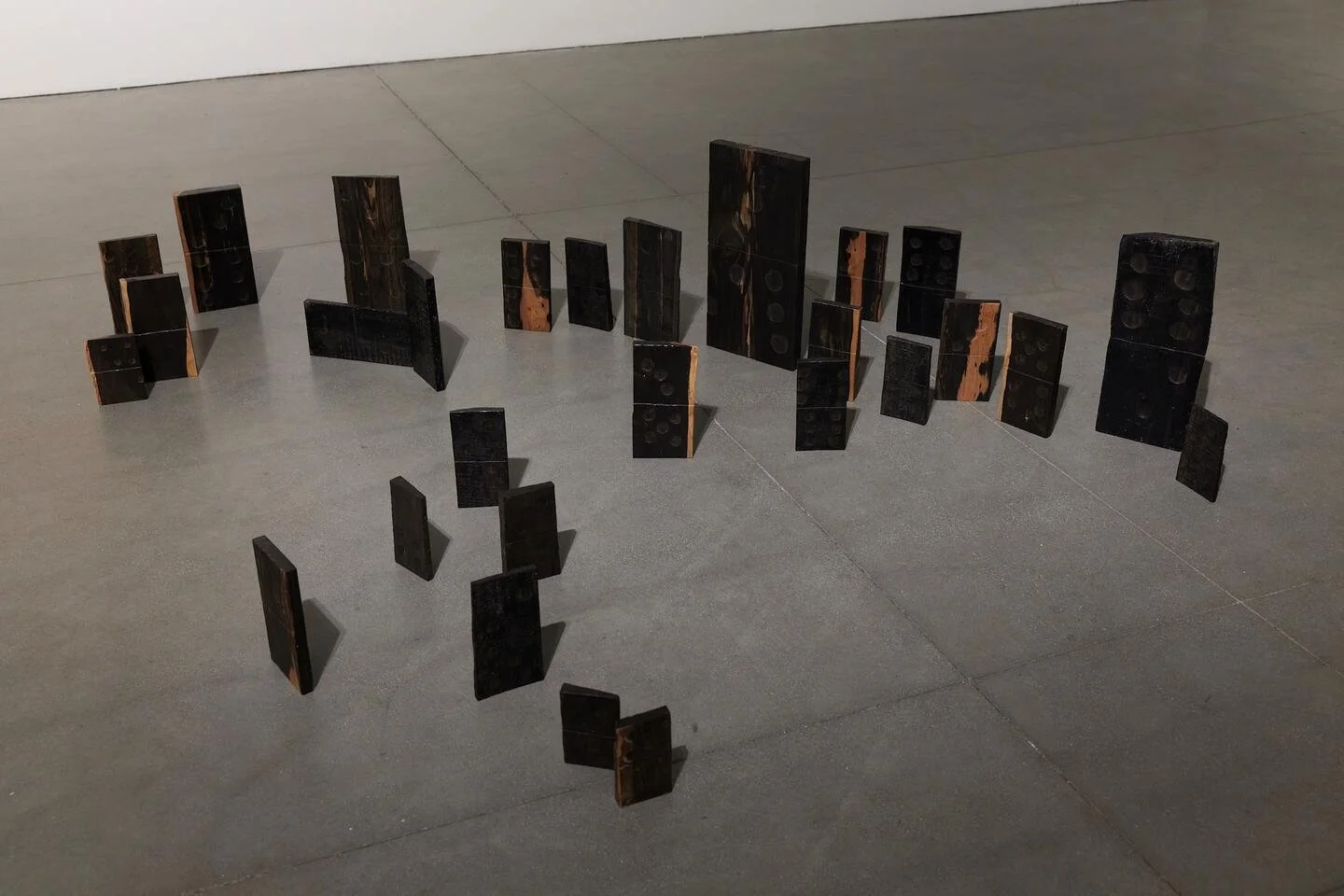
Zenobia Lee, Poiesis, 2025
Hand-carved ebony, dimensions variable (20 pieces ranging from 15.75 x 10 x 2 cm to 39.33 x 16.5 x 2.5 cm). Presented by Sea View
Standing like figures in a crowd, these oversized ebony dominoes transform a Caribbean pastime into a site of kinship and diasporic memory. You become a part of the game.
Zenobia Lee, Why allow the tendrils of the heart to twine around objects (abject) – for Harriet Jacobs, 2024
Steel, 182.88 x 30.48 x 6.35 cm. Presented by Sea View
This monumental steel gimlet pierces the booth like a historical alarm bell, echoing the tool Harriet Jacobs used to carve sightlines while she was enslaved. Jacobs, who documented her experience in her 1861 autobiography Incidents in the Life of a Slave Girl, survived seven years in a crawlspace watching her children through tiny holes she bored herself. The work becomes a puncture between captivity and liberation, collapsing past and present forms of surveillance and resistance.
Bethany Collins, Moby Dick (Epilogue), 2025
Graphite on Somerset paper, 119.1 cm x 82.9 cm x 4.4 cm. Presented by Alexander Gray Associates
Alexander Gray Associates presents two powerful works by Bethany Collins, and beautiful works by legendary artist Melvin Edwards. I am obsessed with how the viewer must work to get the goods — and the goods are good. Collins erases Herman Melville’s text until only spectral fragments remain, including ‘one did survive’ and ‘now liberated by reason’. She turns the sea into a metaphor for migration, disappearance and return, letting language thin like a veil into atmosphere.
Bethany Collins, Old Ship Rose II, 2025
Cast paper with Confederate granite, 24.1 x 22.9 x 10.2 cm. Presented by Alexander Gray Associates
Cast in paper infused with granite dust from a destroyed Confederate monument, this rose form becomes a vessel of remembrance and refusal. Collins transforms sacred architecture into something handheld, insisting that Black spiritual sites endure as spaces where memory, refuge and resistance are held together.
Melvin Edwards, Untitled, 1968
Watercolour and ink on paper, 56.2 x 71.4 x 4.1 cm. Presented by Alexander Gray Associates
This watercolour and ink drawing compresses gesture into something taut and electric, hovering between abstraction and tool-like silhouettes. The work is tethered to Edwards’s ‘Lynch Fragment’ series that has come to define his sculptural language.
Ebony G. Patterson, Studies for a vocabulary of loss VIII, 2023
Digital print on archival watercolour paper, and construction paper, with feather butterflies, plastic flies, roaches, spiders and memorial rosette with the word ‘catastrophe’, 120.7 cm x 77.5 cm x 30.5 cm. Presented by moniquemeloche Gallery
Patterson’s intimate collage layers butterflies, insects and memorial rosettes into a quiet meditation on grief. Her use of the garden as a metaphor for postcolonial space gives the work a tender, unsettling beauty.
Kennedy Yanko, Implicit Raster I + II, 2025
Pigmented multilayered handmade paper, 152.4 x 203.2 cm. Presented by Pace Prints
I am so seduced by Yanko’s multilayered handmade paper pieces. They hum with material intelligence, turning pigment and texture into a kind of sculptural printmaking and giving the surfaces a quiet, magnetic pull.
David Alekhuogie, Scramble for Africa 2-2, 2023
Archival pigment print, 116 x 93 x 4 cm. Presented by Commonwealth and Council
I’m always excited to visit Commonwealth and Council because their programme expands the conversation and champions dynamic talent. Alekhuogie’s archival pigment print reframes colonial cartographies through a contemporary photographic language, destabilizing the visual logic of empire and exposing the violence embedded in seemingly neutral images.
Wendy Red Star, The (HUD) 1, 2025
Presented by Roberts Projects
Wendy Red Star’s work has always impressed me for the way she recentres Apsáalooke life with clarity, humour and sharp political insight. In The (HUD) 1, she turns the everyday architecture of the Crow reservation into a powerful record of community, memory and self‑representation.
Bob Thompson, The Circus, 1963
Oil on canvas, 92.4 x 92.4 cm. Presented by Michael Rosenfeld Gallery
Made 62 years ago, this work feels so fresh it could have been painted yesterday. Thompson’s vivid palette and compressed figuration turn the circus into a stage for mythic drama. He fuses European art historical references with a distinctly Black expressive sensibility.
About Sandra Jackson-Dumont
Sandra Jackson-Dumont is a curator, educator and cultural strategist whose work reimagines the role of museums in public life. Currently the Getty Presidential Scholar, she has held senior positions at the Metropolitan Museum of Art, the Studio Museum in Harlem, the Whitney and the Seattle Art Museum, and was most recently director/CEO of the Lucas Museum of Narrative Art in Los Angeles. In every role, Sandra has passionately bridged the worlds of academia, popular culture and diverse communities, forging meaningful connections among artists, archives, and audiences. Her work consistently breaks down barriers, dismantling the divide between ‘high art’ and the pressing social issues of our time.