Architectural Digest
“Visit LuckyChap’s New Office With Margot Robbie, Tom Ackerley, and Josey McNamara”
by Kristen Flanagan
May 27, 2025
Margot Robbie doesn’t consider herself an “office person,” but the design of LuckyChap’s new Los Angeles headquarters makes it hard to stay away. “I don’t like sitting in one room for a long time—I get antsy,” she admits. “So as beautiful as my office is, and it’s incredibly beautiful, I spend way more time there than I ever imagined I would.”
Robbie, Tom Ackerley (Robbie’s husband), and Josey McNamara—cofounders of the production company behind I, Tonya; Saltburn; Barbie; and the new dark comedy Sirens, now streaming on Netflix—have never been drawn to a typical office environment. “We’ve always been averse to conference rooms,” says McNamara, noting that LuckyChap’s earliest HQ was no more than a kitchen bench in a London flat.
Ten years and three moves later, the trio knew exactly what they didn’t want for their next space: a conventional setup, like a studio backlot cliché plastered in movie posters. “We wanted it to feel like a creative space, not a CV,” says Ackerley.
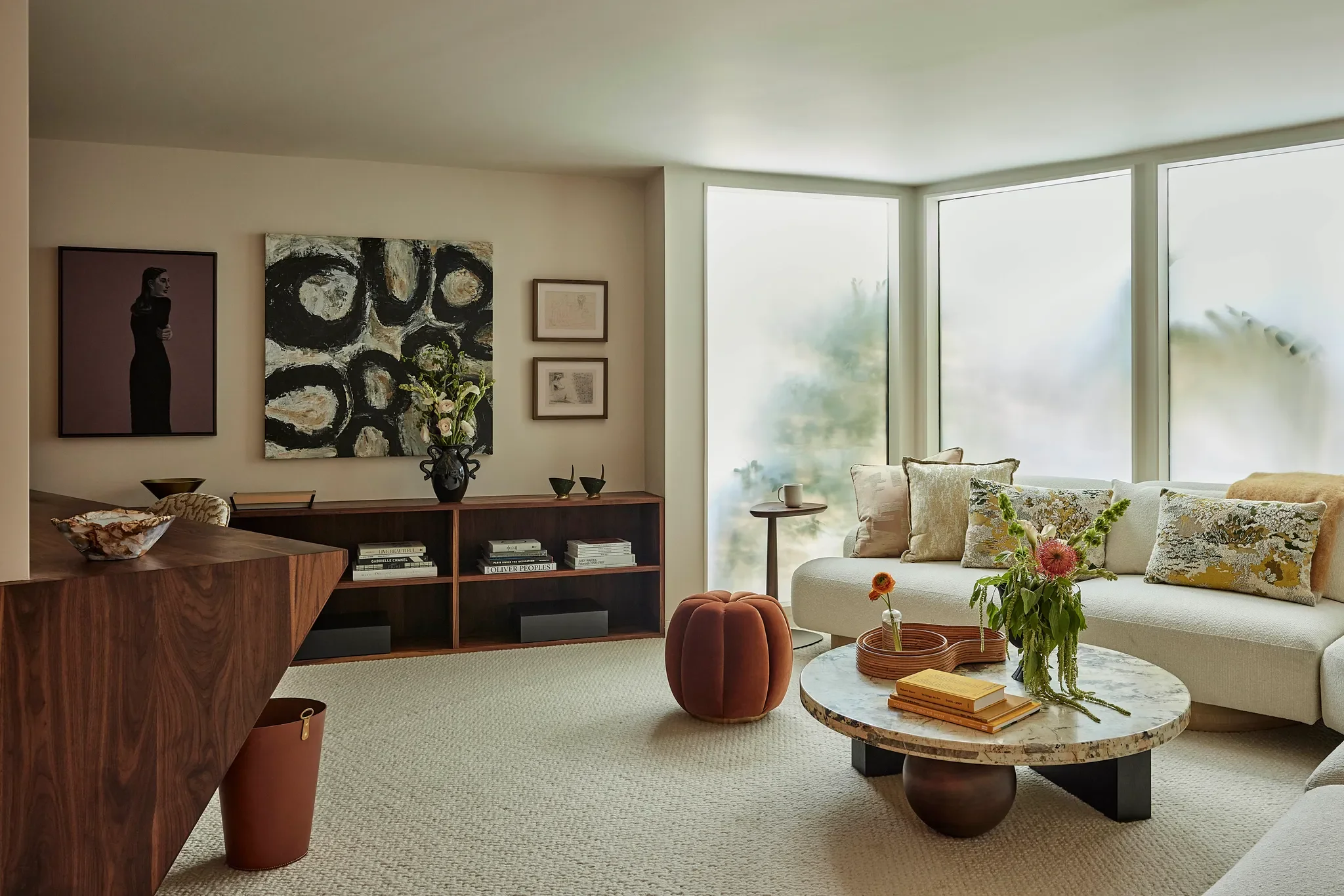
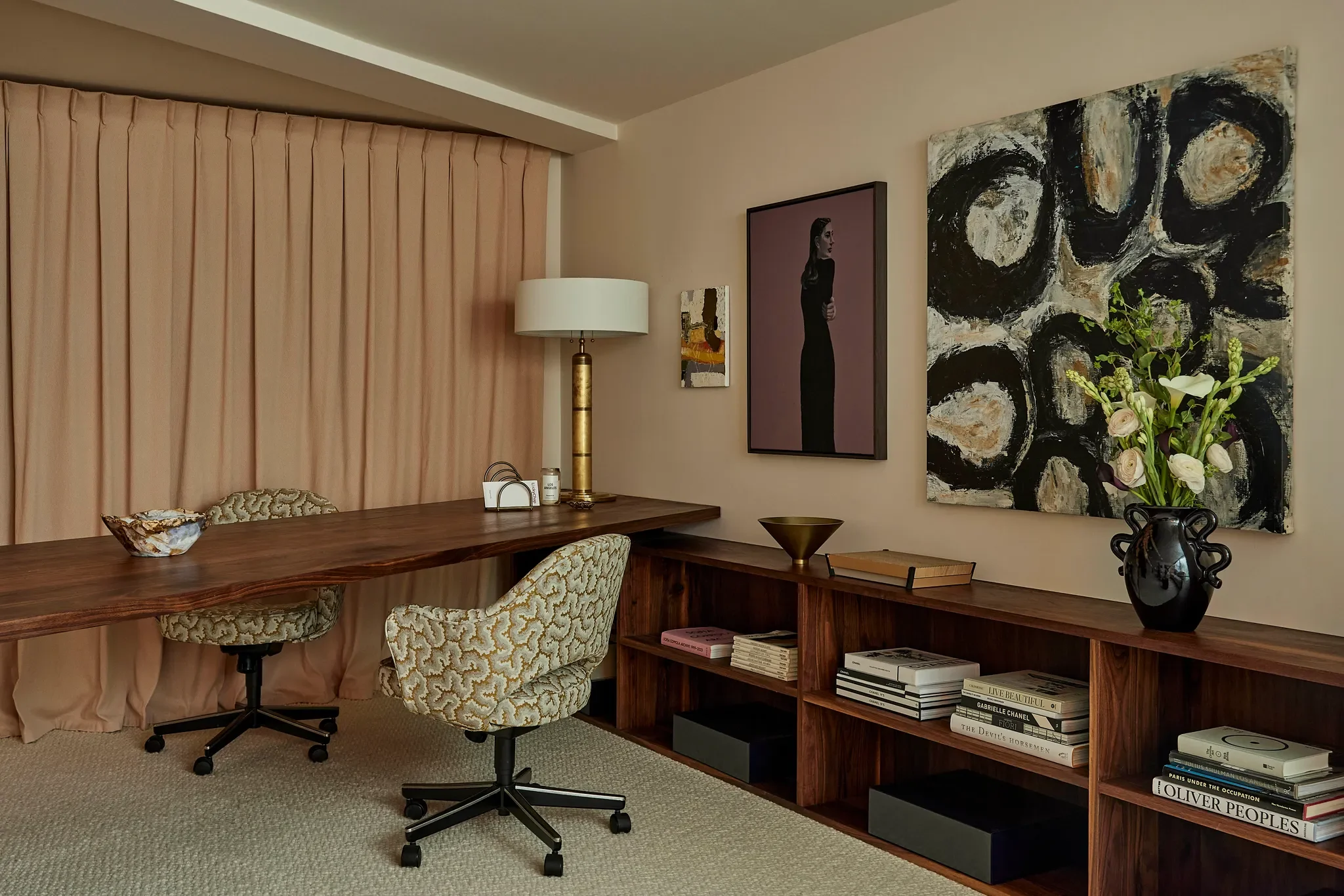
So they called on Scarlett Hessian, a longtime friend and collaborator, to help them transform a 5,000-square-foot former fish shop. “When they first showed me the building, I was a bit horrified, to be honest,” the interior designer confesses. Now, despite the unassuming exterior (the original neon signage still flashes outside and draws in passersby), the interiors tell a different story: one that’s layered, textural, and quietly cinematic. With high vaulted ceilings and an airy mezzanine, Hessian saw the architecture as a starting point. “We decided to lean into its midcentury style and bring in a mix of European pieces to give it personality,” she says. The art throughout the space was curated by Brandy Carstens.
The result has what Ackerley calls “a house-style, familial feeling.” The oak-paneled kitchen, which serves as a communal hub, is laid out more like a residential galley, where the staff regularly cook breakfast and gather for lunch. The coffee bar, with its antique mirrored backsplash and café-grade espresso setup, is such a highlight that McNamara admits to driving in on weekends just to make a cup. “The machine is that good,” he laughs.
And while there is no flashy branding, discreet callbacks to LuckyChap’s films are peppered throughout. A set of chairs was salvaged from the Barbie set and reupholstered for daily use. “These are the exact chairs from the Mattel boardroom scene with Will Ferrell,” says Ackerley. There’s also a blush-toned conference table (a subtle homage to the blockbuster) and a coffee table collection of script books from the company’s biggest hits.
The same understated approach extends to their accolades. “These guys didn’t want any of their awards on display,” Hessian says. “So I’ve hidden them among the bookshelves. You might casually come across a BAFTA.” Recently, McNamara found a Golden Globe in the printer room.
As for the individual offices, Hessian tailored each one to the person who uses it. Robbie’s, for instance, features multiple work zones. “She’s not one to sit still,” Hessian explains. In addition to a double-sided desk, there’s also a laptop table that slides up to a plush sofa, all set atop wall-to-wall carpet for a noise-softening finish.
Even with all that attention to detail, Robbie finds herself gravitating outdoors: “I’m not very good at staying inside. So if I’m reading scripts or having lunch or even doing meetings, I go up to the terrace.” The sunlit rooftop—lush with butterfly-attracting plants, vintage-style planters, and red-flecked C&C Milano cushions—is just one of many inviting moments that feel far from corporate.
“We’re in a work-from-home culture,” says Ackerley. “But no one here works from home by choice. People want to be in the office. And we’re proud of that.” It’s a fitting evolution from the kitchen bench where LuckyChap got its start.