Yu Kobayashi x Kazunori Hamana
Chiba, Japan
October 30—November 01, 2026
Yu Kobayashi (b. 1957, Aichi, JP) and Kazunori Hamana (b. 1969, Osaka, JP) first met fourteen years ago, beginning a friendship and ongoing exchange in ceramics and art that has since informed their respective practices. Both artists have built their lives nestled between the mountains and the ocean, paying close attention to the natural world and to the minutiae of daily life. In Japan, their studios hold a collection of days spent outside: rocks and shells scattered near windows, functional objects carved from found driftwood, and the food… piles of hand-picked citrus or fresh rice from a well-loved garden, changing with every season. Their mantric attentiveness to their surroundings isn’t simply connected to the act of making, but a vital part of it. Appreciation itself is its own mode of creation: a way of noticing what is small, transient, and easily overlooked.
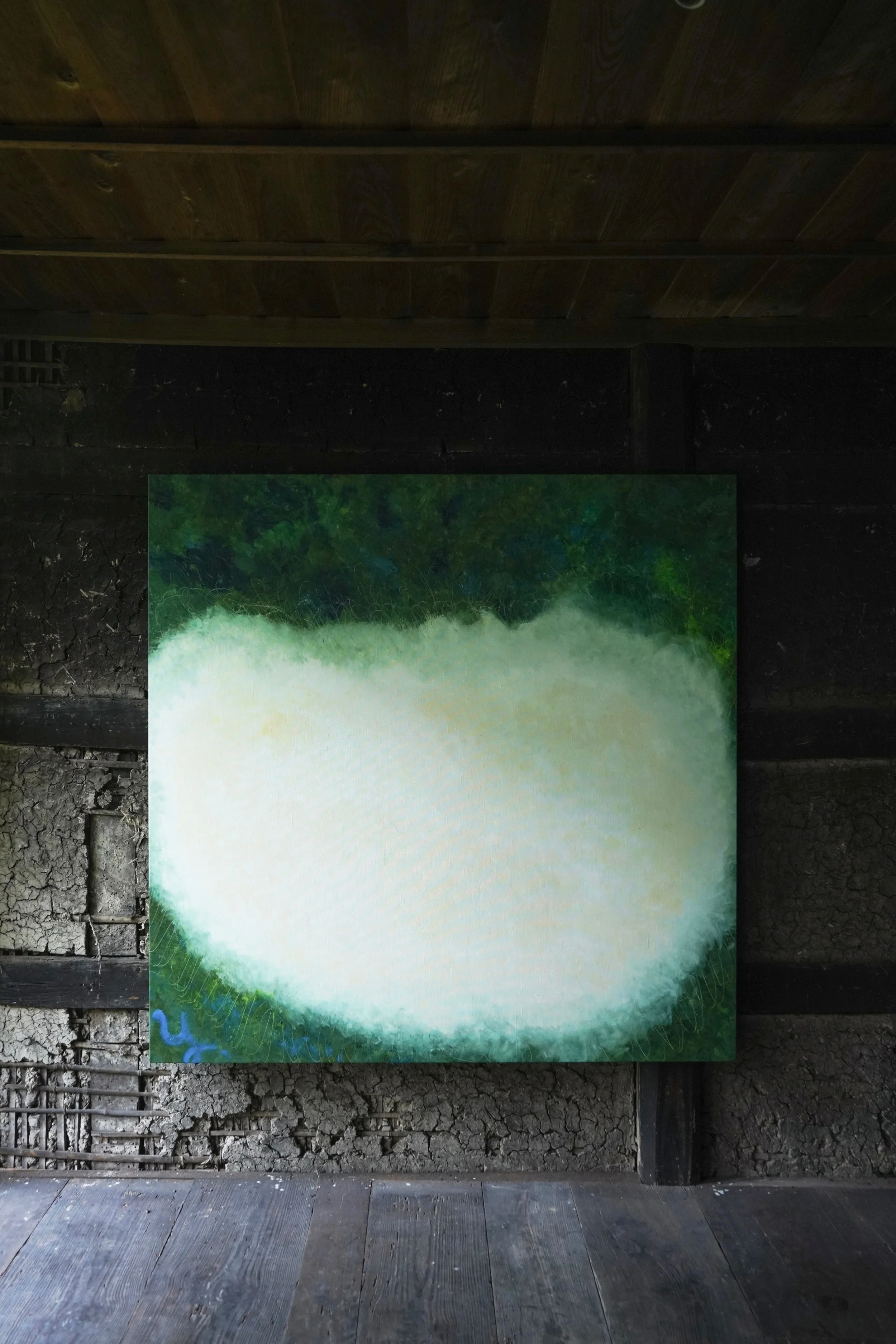
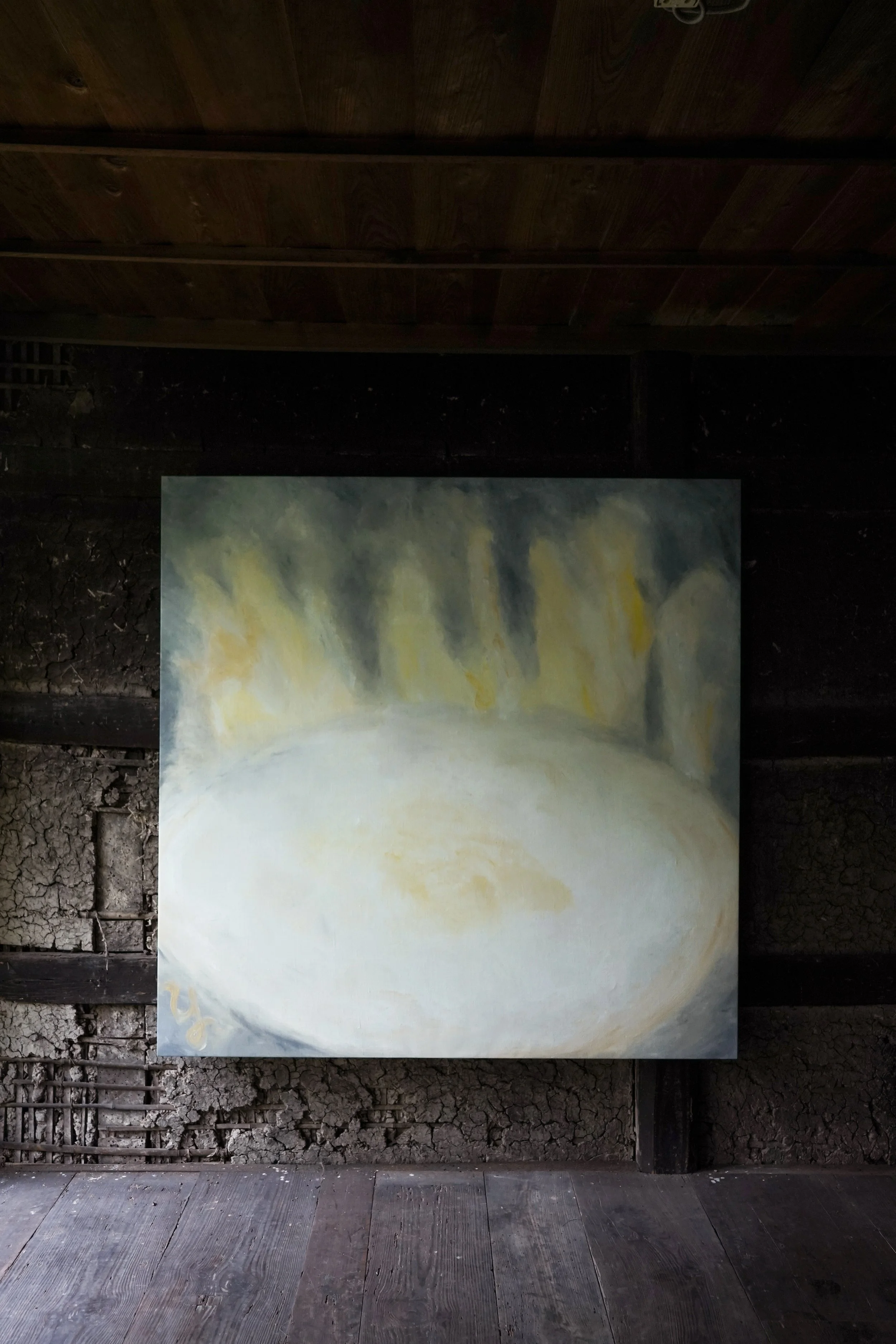
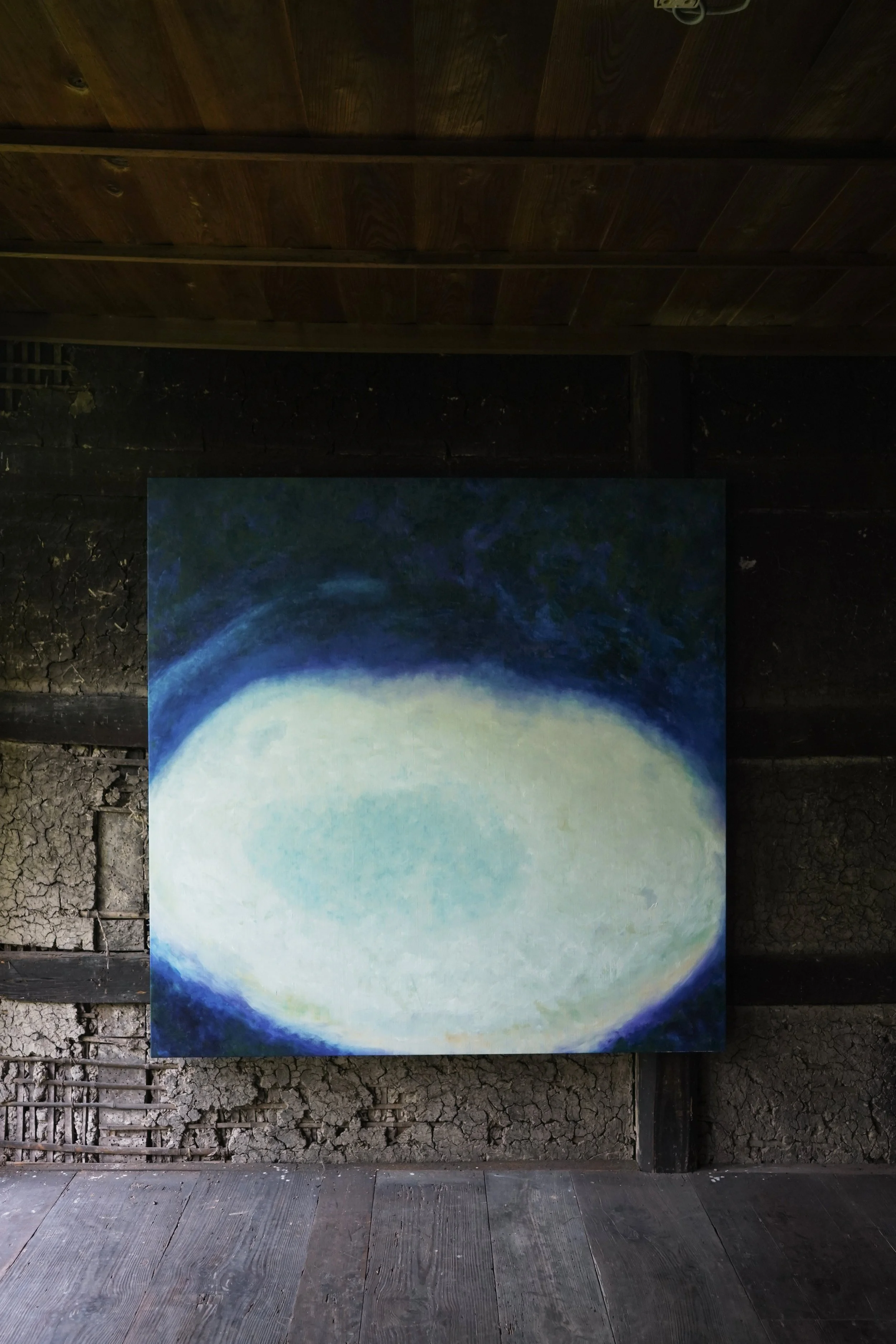
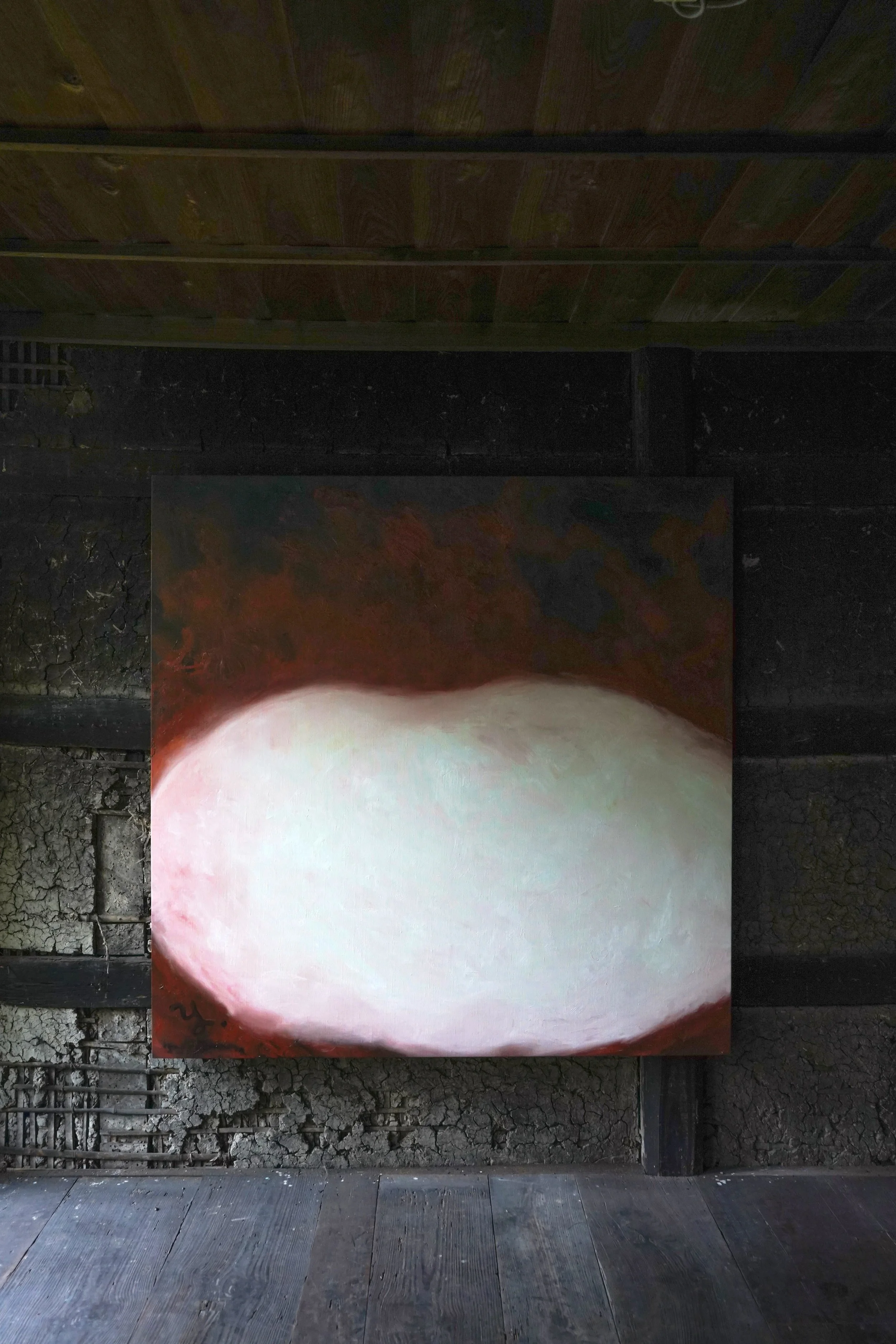
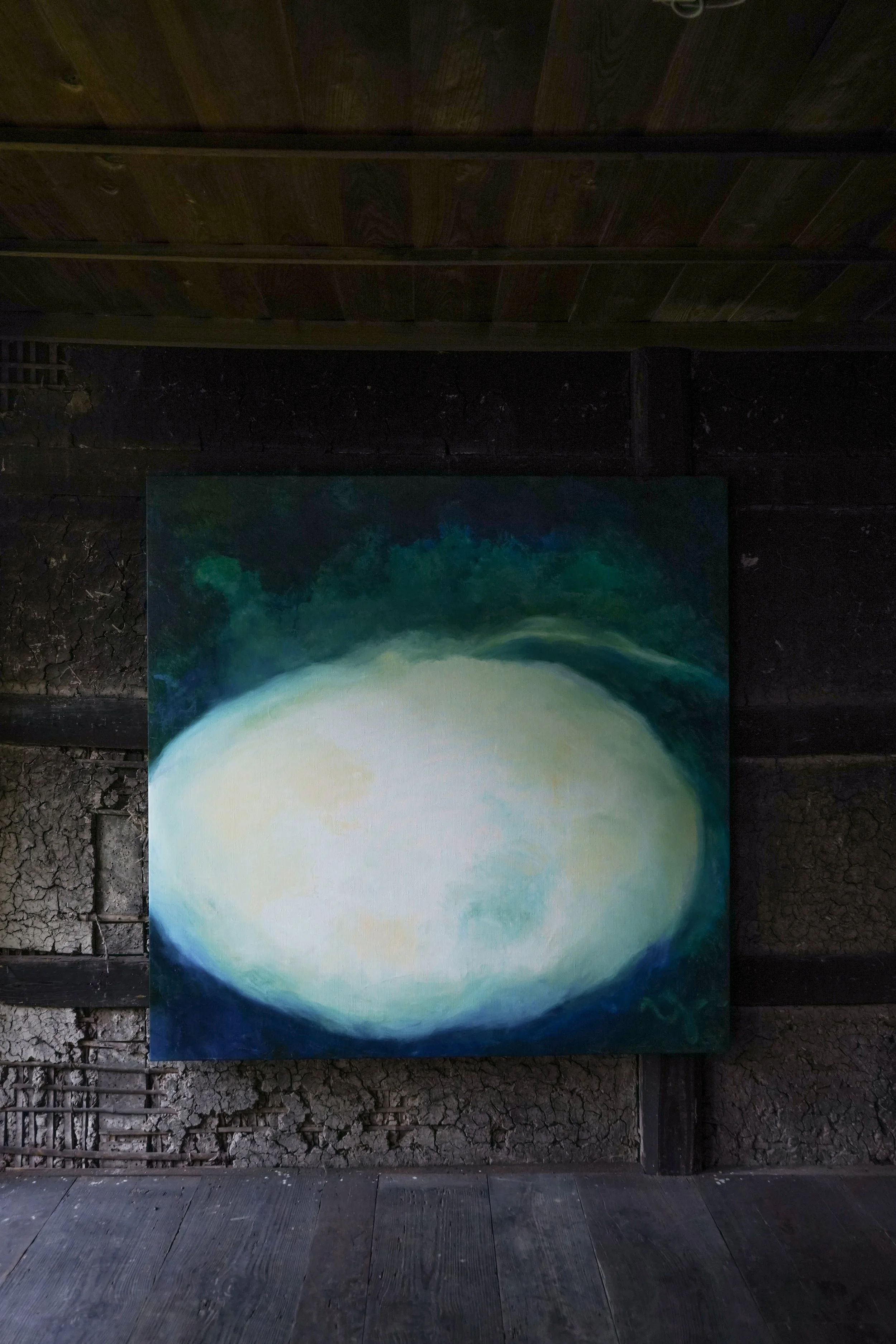
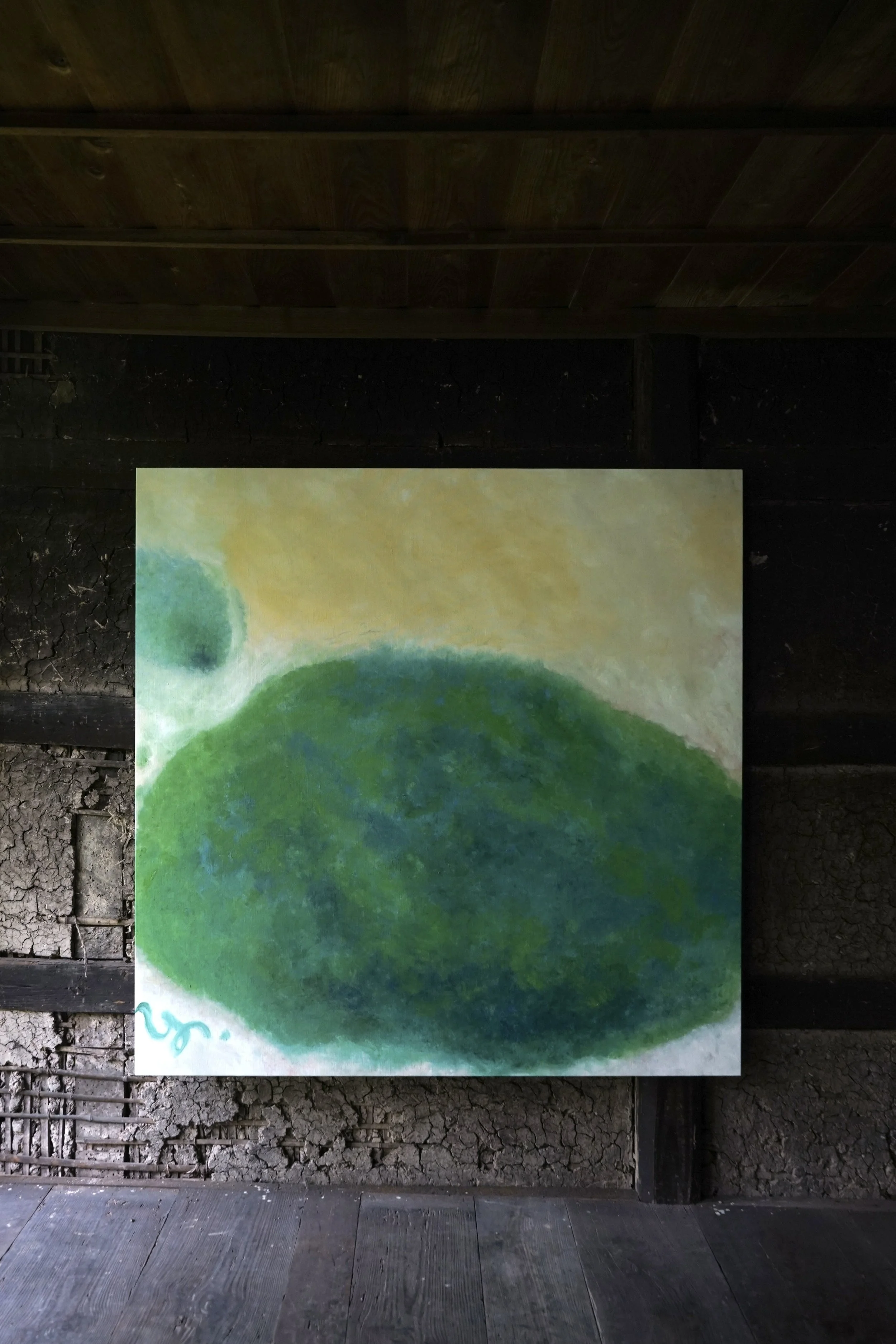
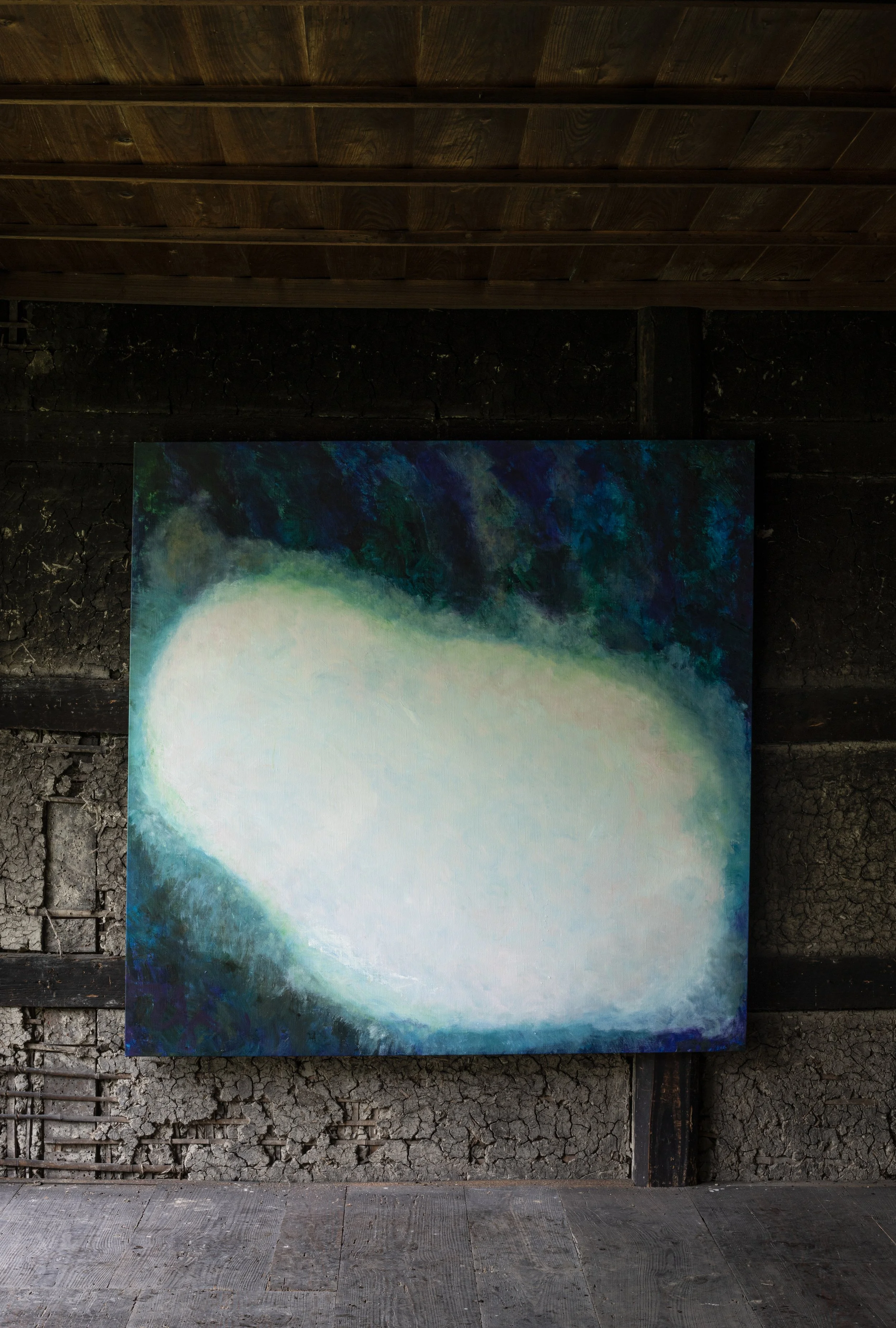
For Kobayashi, these observations often become the basis for new bodies of work. A cocoon discovered in her garden toward the end of summer, or the first sprouts appearing in spring, act as a point of departure. In her newest abstract paintings, glowing white orbs hover within dense fields of earthen color. Protective yet inherently transitional, the cocoon-like forms suggest nurture, protection, the anticipation of another state, or an enclosure defined as much by what it will release as by what it contains.
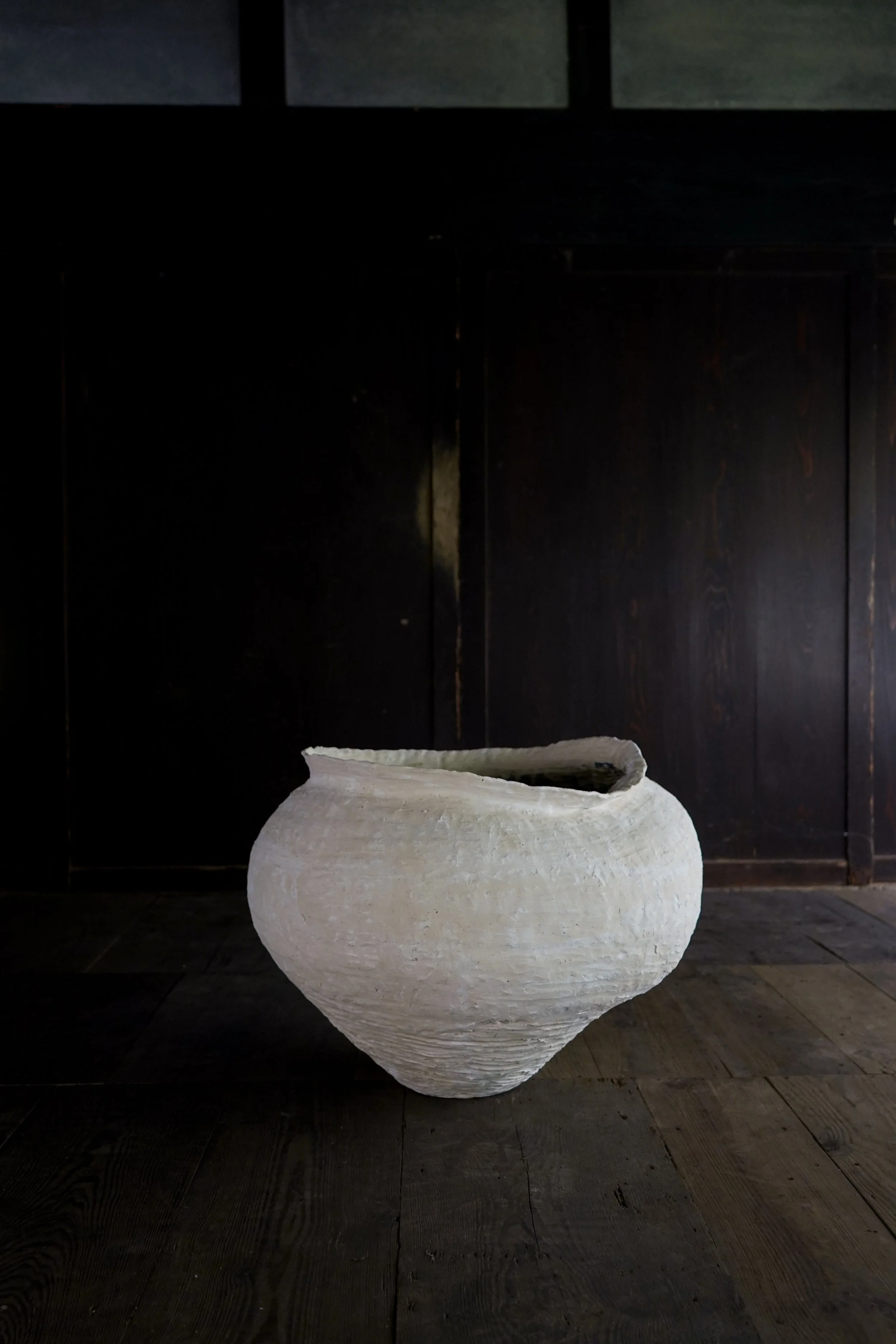
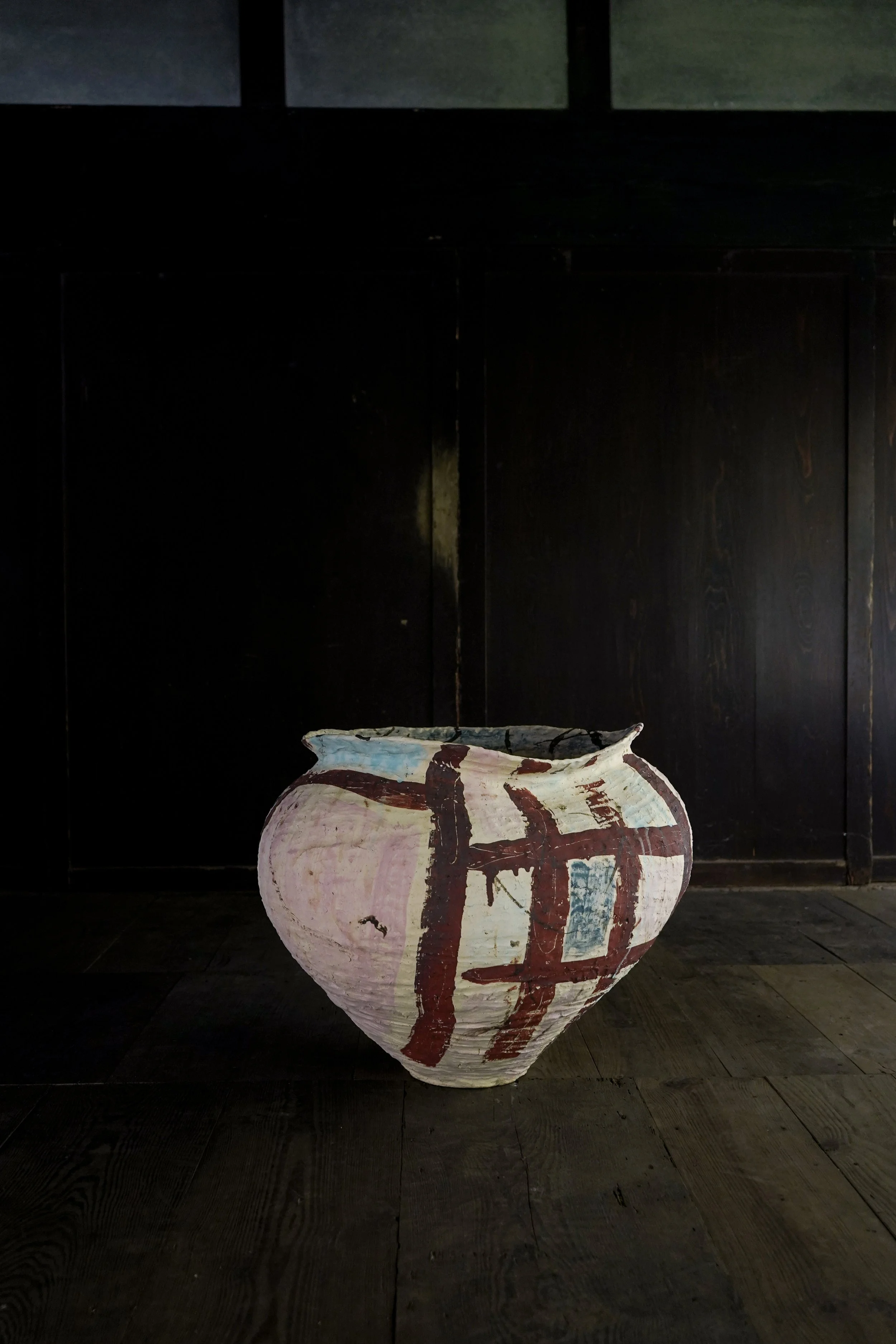
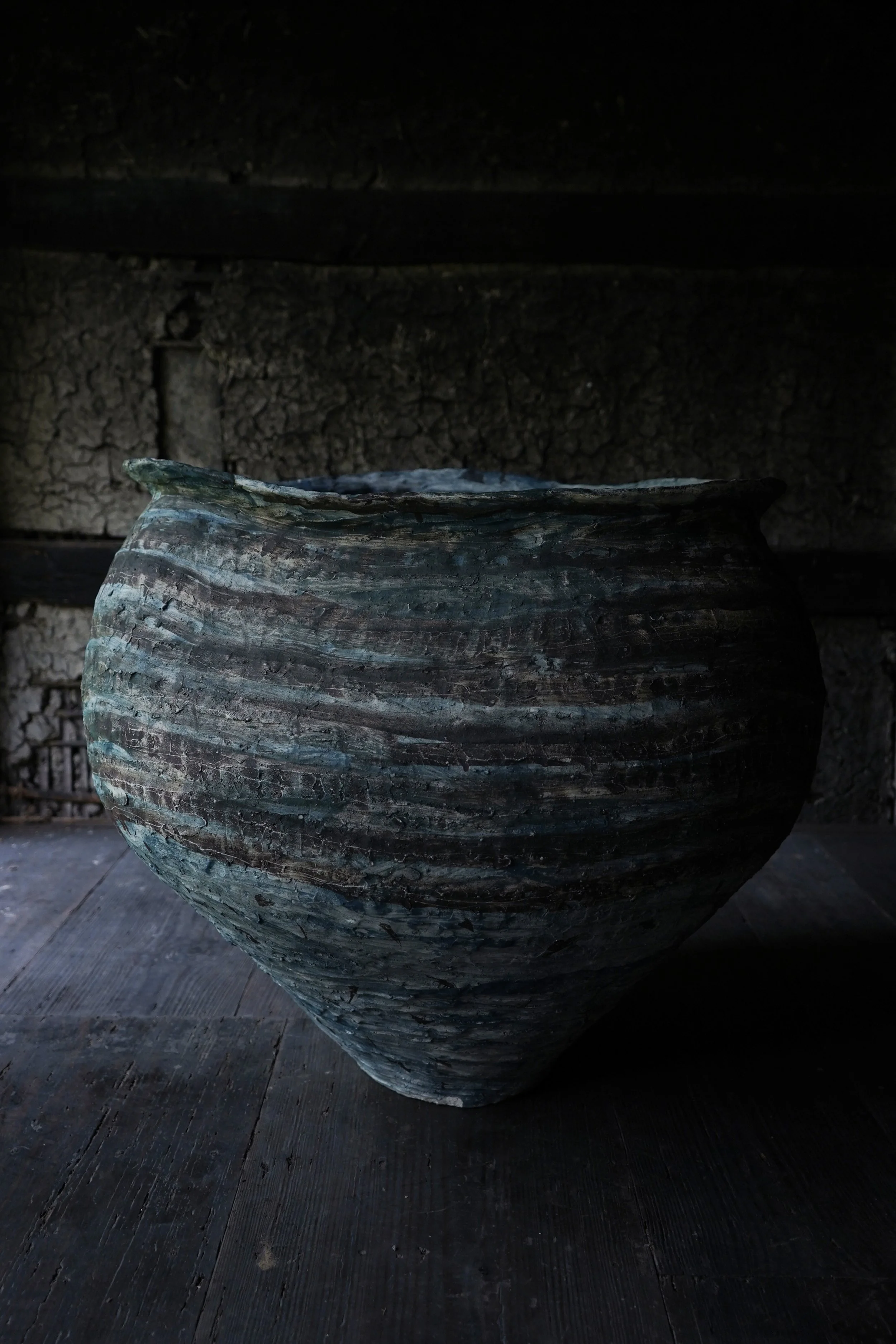
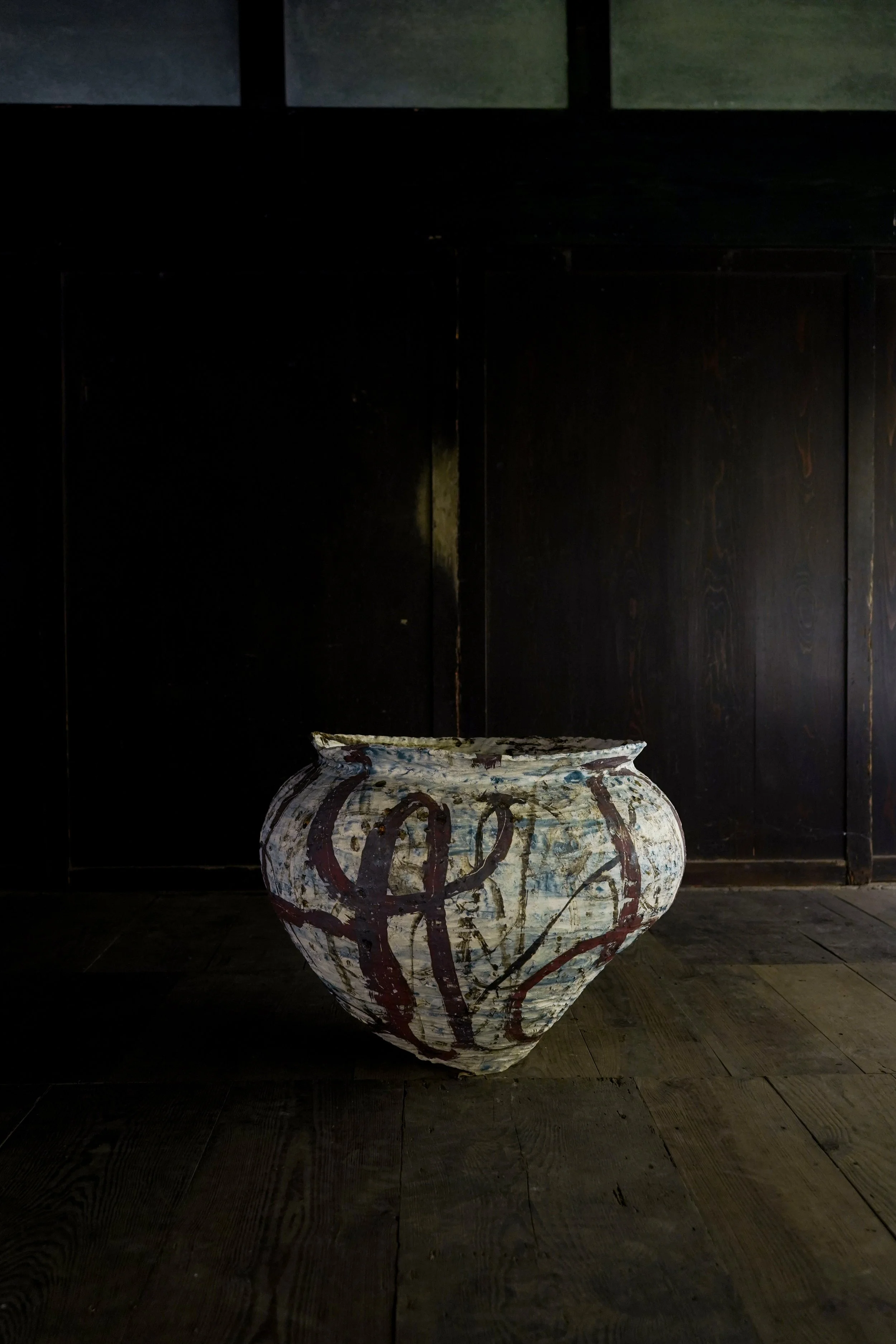
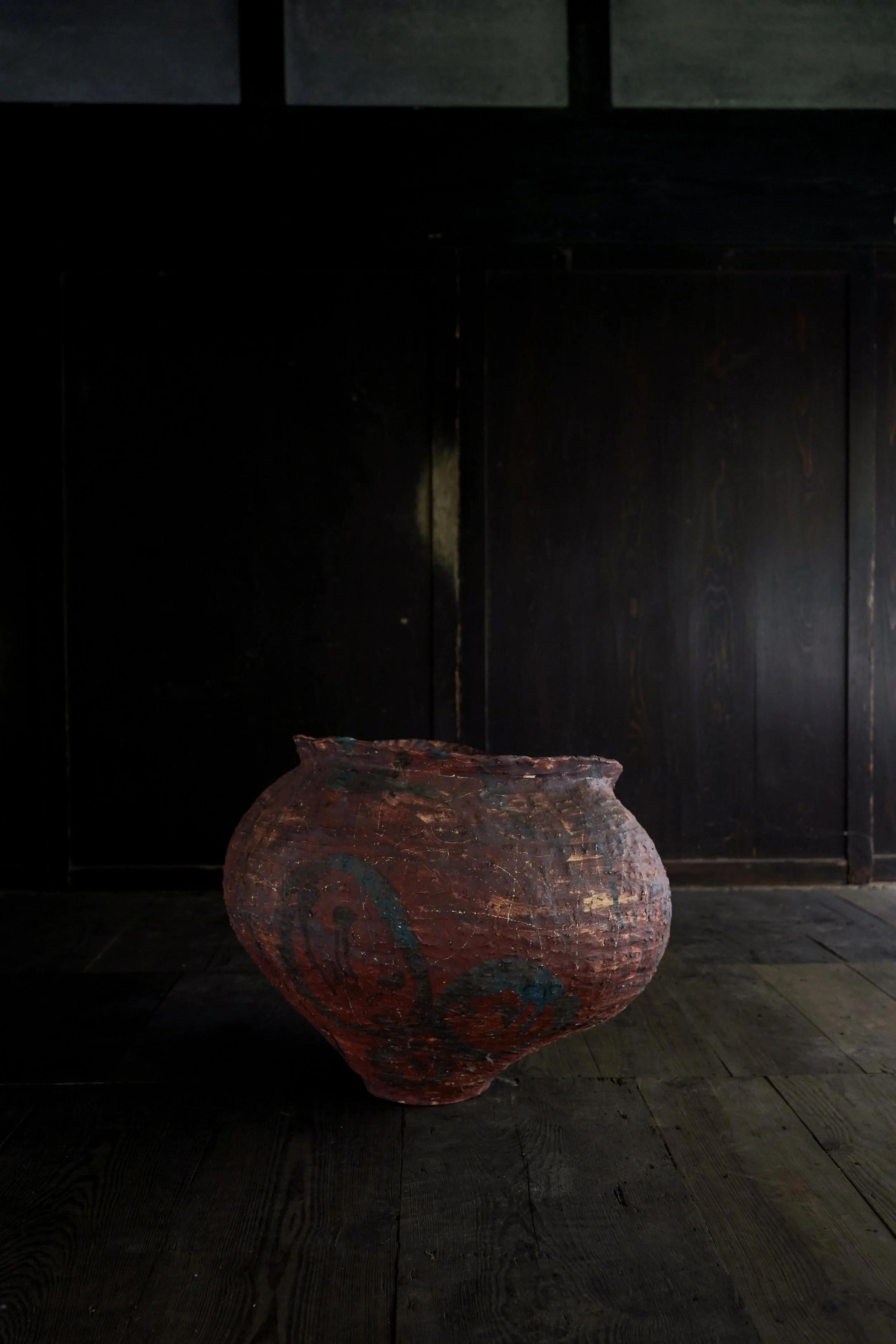
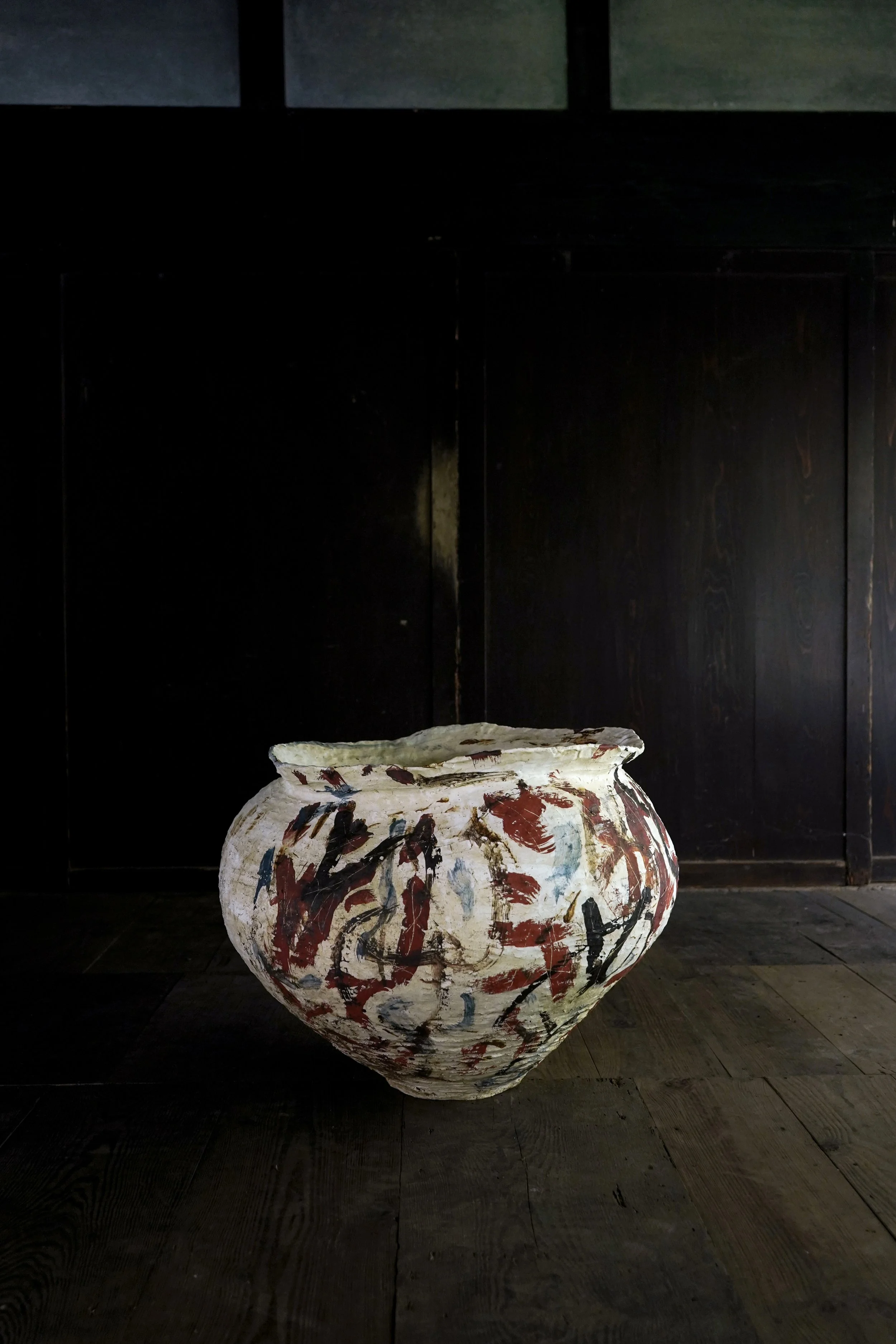
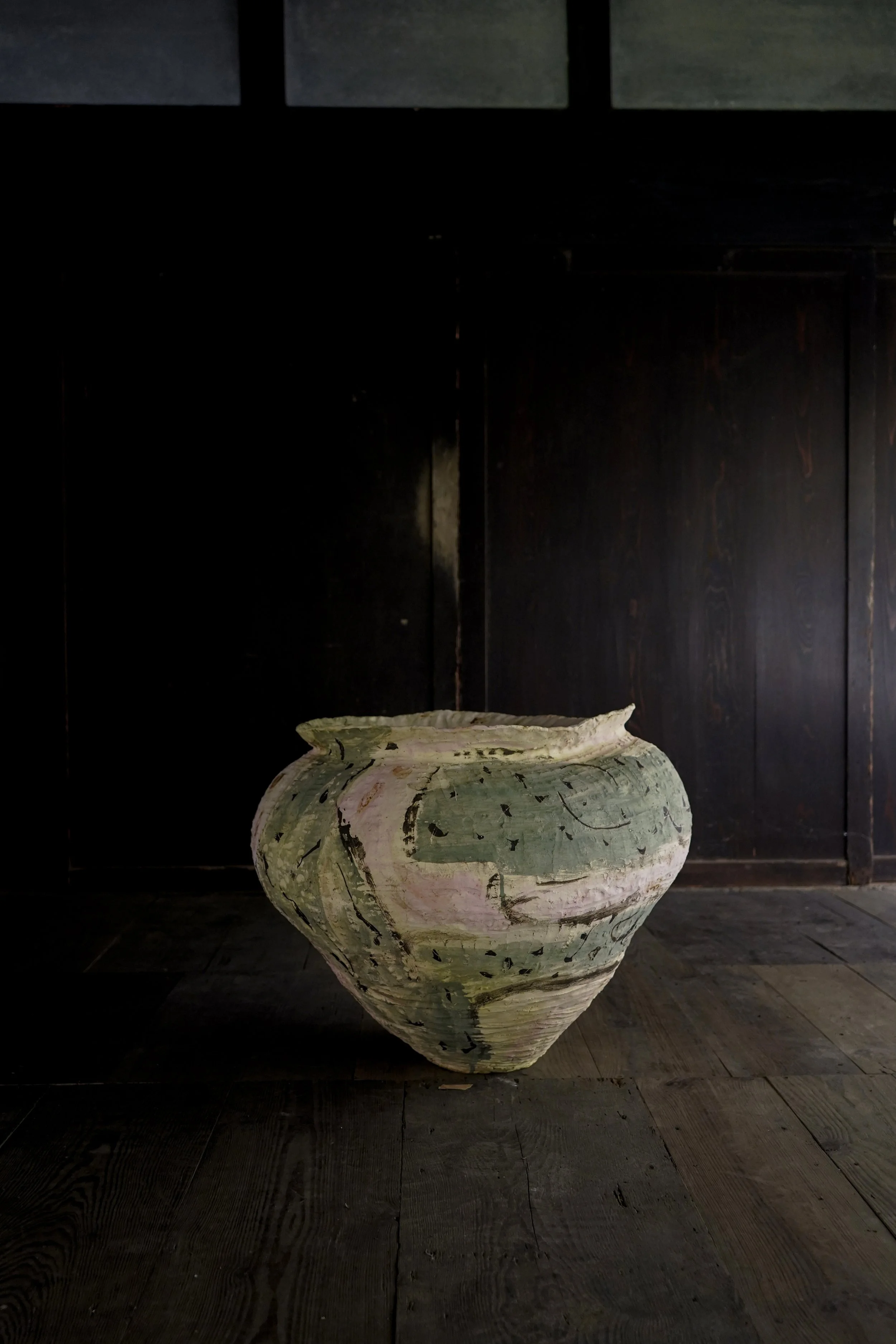
A similar tension between physical structure and absence runs through Hamana’s ceramic vessels. Drawing from the traditional Japanese tsubo, his pots resist symmetry and refinement, their contours shaped through firing, pressure, weather, and time. Rather than correcting these irregularities, Hamana allows natural forces to remain present within the finished object. Like Kobayashi’s cocoons, the vessels feel at once tangible and vacuous: forms that suggest containment while directing attention toward a cosmic space that cannot be seen.
In both bodies of work, the rounded egg-like form becomes a means of approaching something that is distinctly physical yet immanent–fragility, transformation, subconsciousness, and the void that both precedes and follows our physical nature. Presented together for the first time despite their long-standing friendship, the exhibition between Yu Kobayashi and Kazunori Hamana makes visible their unspoken dialogue and ritualistic approach at living and making generatively.